The streets in Nottoway Village are named after Plantations.
NOTTOWAY PLANTATION, near New Orleans
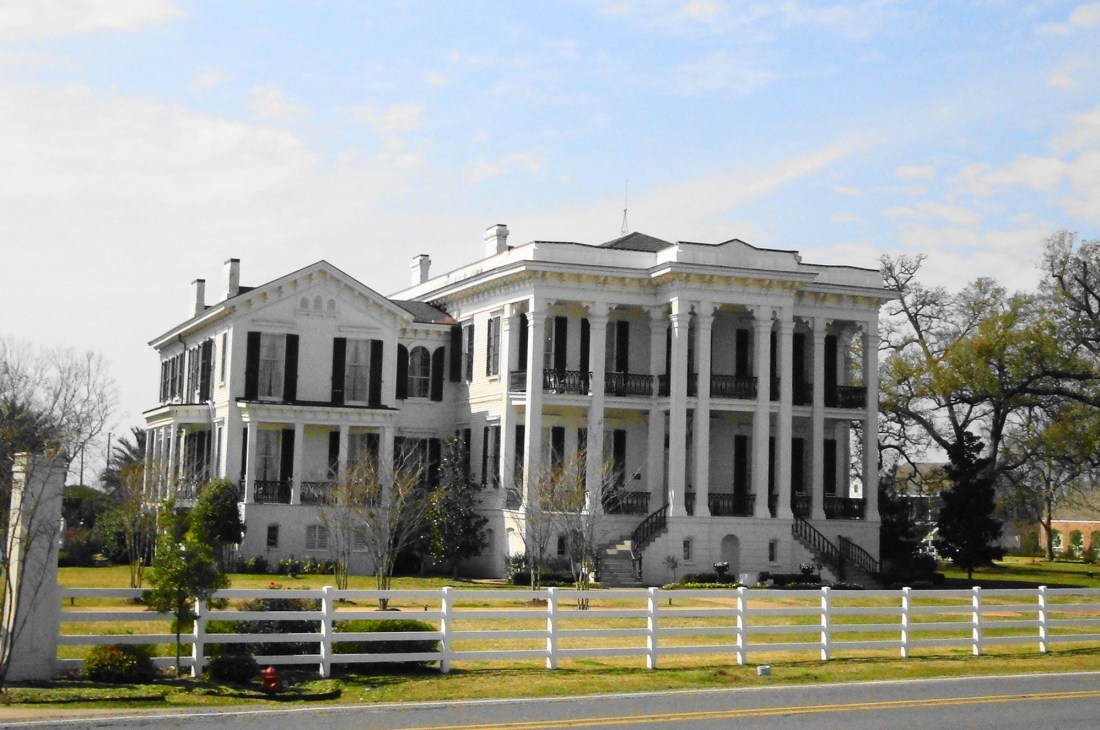
Nottoway Plantation, also known as Nottoway Plantation House is located in White Castle, Louisiana. This home was completed in 1859 for the John Hampden Randolph family.
Emily Jane and John had eleven children, including Cornelia who would later become famous for writing her diary “The White Castle of Louisiana”. Women were not allowed to publish books during this time so Cornelia used M.R. Ailenroc (which is her first name spelled backwards and her maiden and married initials) as her publishing name.
BOCAGE PLANTATION, near New Orleans
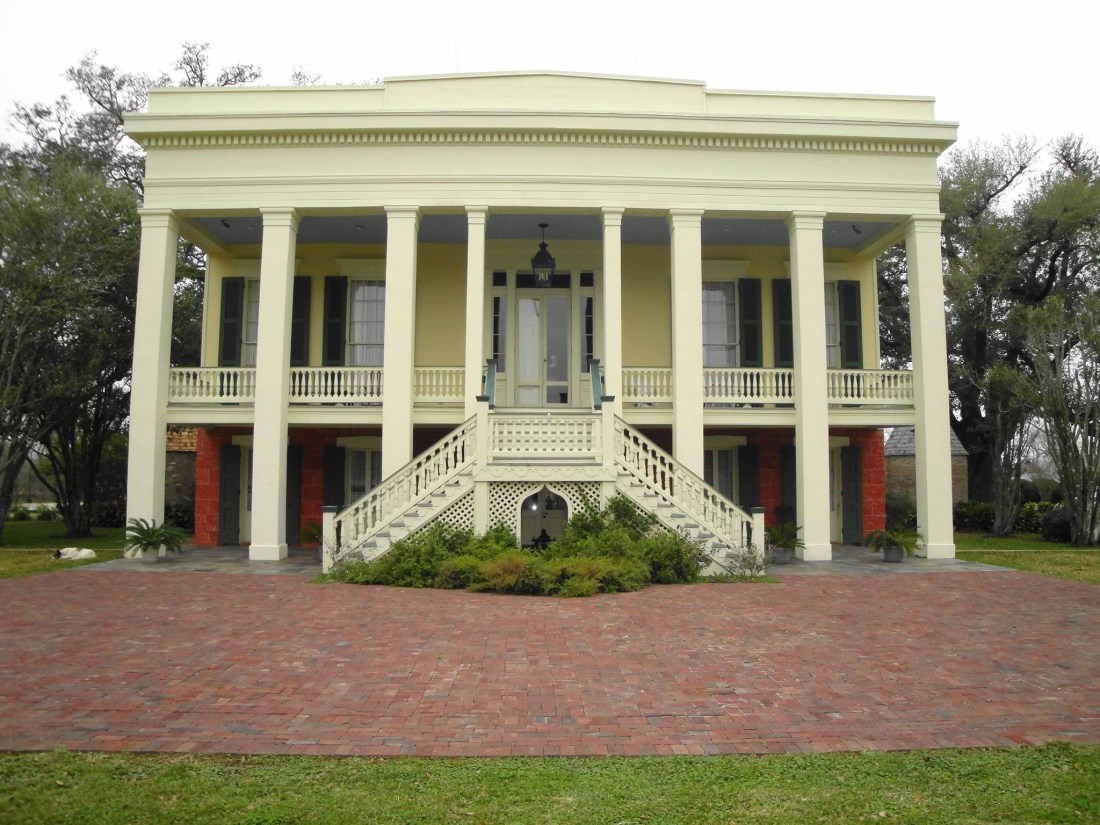
Bocage Plantation was a wedding gift from St. James Parish planter Marius Pons Bringier to his eldest daughter, Francoise “Fanny” Bringier (just 14 years old), upon the occasion of her marriage to Christophe Colomb (a native of Paris, France, who claimed to be a descendant of Christopher Columbus), in January 1801.
Fanny was born March 9, 1786 at White Hall Plantation in St. James Parish. Christophe was born October 1770 in Corbille, France. The couple had eight children – Louis Arthur, Christophe Jr., Virginia, Amelina, Cedalie, Leapold, Pons, and Henry Octave.
Local history states that Christophe was more interested in the finer things of life, music, painting, entertaining, etc., than working a plantation and that it was Fanny who took over the operations of Bocage. She handled everything from the management of the house to the cane fields.
Fanny passed away May 10, 1827 at Bocage Plantation.
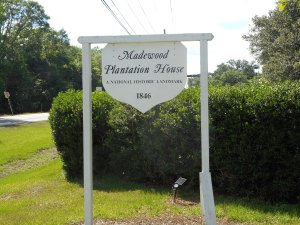
MADEWOOD PLANTATION, near New Orleans
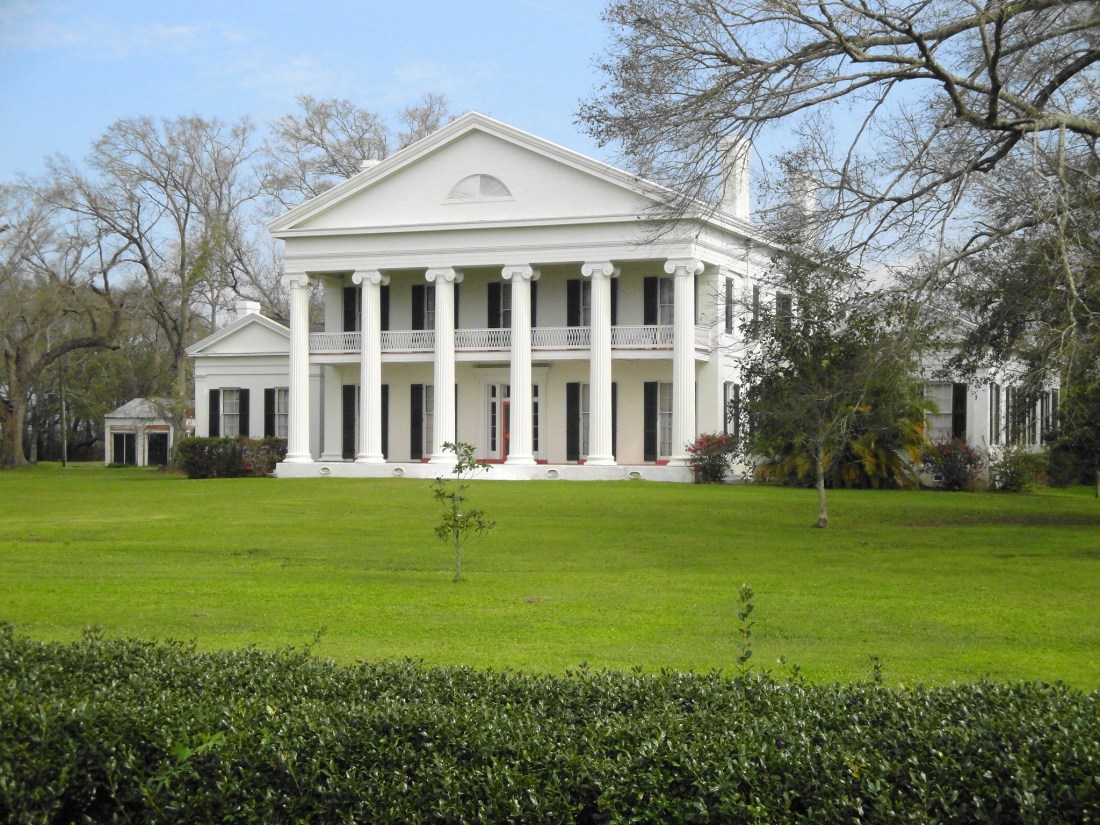
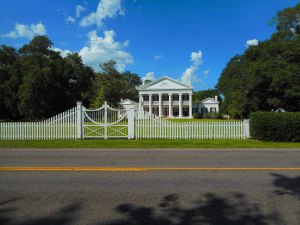
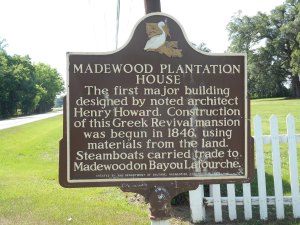
The mansion was built for the Colonel Thomas Pugh between 1800 and 1848 and was designed by architect Henry Howard in Greek Revival style. The house was originally the manor house for a 10,000 acre sugar plantation.
Thomas Pugh was the half brother of William Whitmell Hill Pugh who owned the Woodlawn plantation and Alexander Franklin Pugh who was part owner of the Augustin, Bellevue, Boatner, and New Hope plantations. Thomas Pugh died of yellow fever in 1852. During the Civil War, the lawns were used by Union troops as a hospital.
PARLANGE PLANTATION HOUSE, near New Orleans
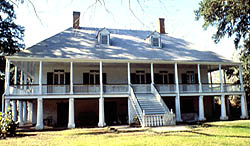
The Parlange Plantation, built about 1750 in southeastern Louisiana is a classic example of a large French Colonial plantation house in the United States. Exemplifying the style of the semi-tropical Louisiana country house, the Parlange Plantation home is a two-story raised cottage. The main floor is set on a brick basement with brick pillars to support the veranda of the second story. The raised basement is of brick, manufactured by slaves on the plantation. The walls, both inside and out, were plastered with a native mixture of mud, sand, Spanish moss and animal hair (bousillage), then painted. The ground story and second floors contain seven service rooms, arranged in a double line. The walls and ceiling throughout the house were constructed of close-fitting bald cypress planks.
Vincent de Ternant received the plantation grounds from a French land grant and developed the 10,000 acres (40 km²) into an active plantation facing False River. When de Ternant’s son Claude inherited the plantation, he changed the cash crop from indigo to sugarcane and cotton.
When Claude de Ternant died, his second wife Virginie remarried. Virginie’s second husband, another Frenchman, was Colonel Charles Parlange, from whom the plantation took its name.
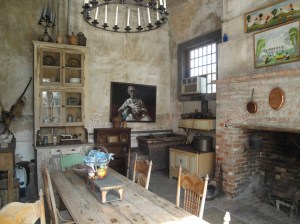
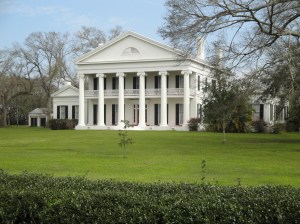
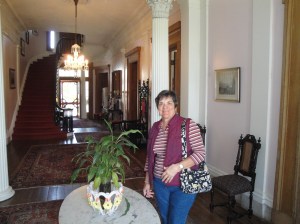
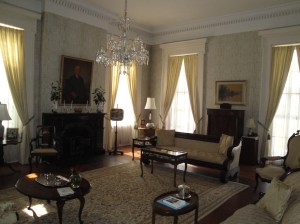
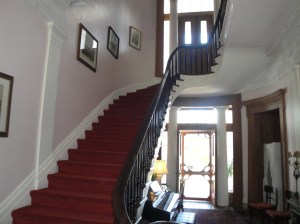
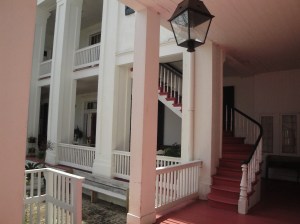
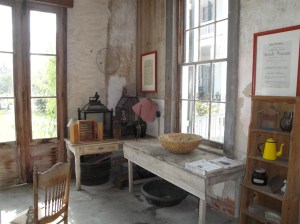
Pictures from Al Beall and Bruce MacBride of the Nottoway
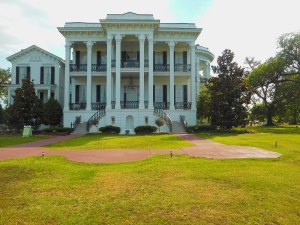
and Madewood Plantations.
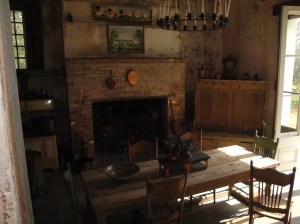
 Nottoway Village